
Ostrich Effect
The tendency to avoid or ignore negative or unpleasant information.
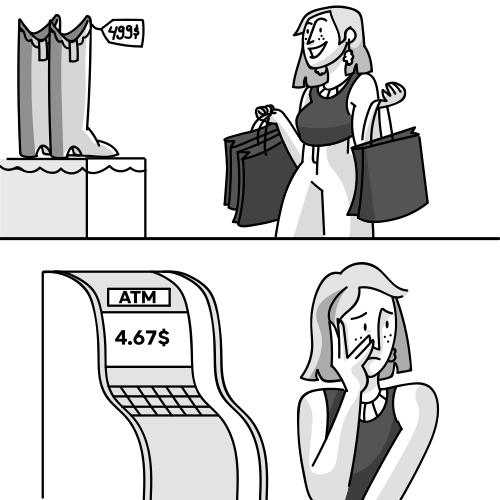
Despite popular belief, ostriches don't actually bury their heads in the sand, but this myth provides a vivid metaphor for the Ostrich Effect. This bias occurs when people choose to ignore distressing or problematic issues, hoping they'll disappear if not acknowledged. It's like avoiding looking at your bank account after a spending spree or not wanting to hear feedback that might be critical. The Ostrich Effect isn't just about ignorance; it's a deliberate avoidance of confronting uncomfortable truths or realities, often under the misguided belief that not seeing a problem makes it less real or impactful. This behavior can be understood as a psychological defense mechanism. It's a way to avoid the discomfort or anxiety associated with certain pieces of information or the decisions and actions that such information might necessitate.
Example
Personal Finance Avoidance
Avoiding to review your bank account after a period of heavy spending, hoping that not seeing the balance will make the problem feel less real. Why? Ignoring financial issues doesn't resolve them and often leads to more significant problems, but the immediate comfort of 'not knowing' can be a powerful motivator for avoidance.
In your professional life
No-Surprises Policy:
Implement a "no-surprises" policy in your work routine, where you regularly review and update key performance indicators or project milestones. This could involve setting aside time each week to assess financials, customer feedback, or progress reports, even if you anticipate negative results. By facing potentially uncomfortable information head-on, you can address issues early and avoid larger problems down the line.
Go deeper in ThinkBetter
ThinkBetter is the app for mental models and cognitive biases. For Ostrich Effect, the free version includes more than this page — further examples, a quiz, audio, and a weekly path — and every model and bias in the library. Pro is an optional, inexpensive upgrade for the rest of the deep-dive.