
Sunk Cost Fallacy
The tendency to continue something once an investment has been made into it, even when it's clear that is not working or being beneficial.
Picture yourself at a movie theater, watching a film that's so dull you're dozing off. You think, "I should leave," but then remember the ticket price and decide to stay, hoping it'll get better. That's the Sunk Cost Fallacy in action. The money spent on the ticket is a sunk cost – it's gone, whether you stay or leave. This fallacy captures our irrational commitment to things, endeavours because of what we've already invested into those (in other words: what we lost), rather than based on the current and future value or potential.
Example
Business Projects
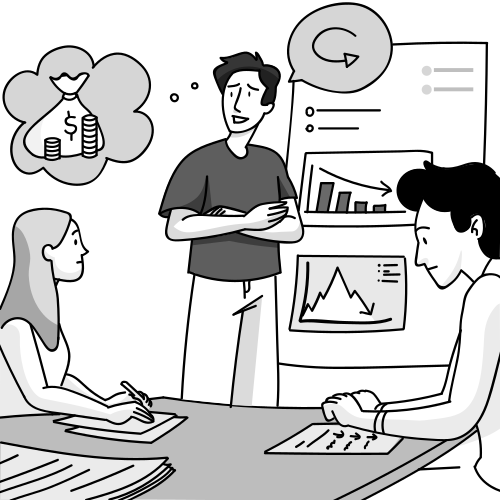
A company continues to fund a failing project because they've already invested heavily in it. Recognizing the sunk cost fallacy would help them cut their losses and allocate resources to more promising ventures.
In your professional life
Focus on Future Value
Evaluate ongoing projects based on their future potential rather than past investments to make objective decisions about continuing or stopping work. As a product manager, regularly assess your product roadmap against current market trends and user feedback. If a feature you've been developing for months no longer aligns with user needs or company goals, be prepared to shelve it in favor of more promising initiatives. This forward-thinking approach demonstrates your ability to make tough, strategic decisions that prioritize long-term success over short-term emotions.
Go deeper in ThinkBetter
ThinkBetter is the app for mental models and cognitive biases. For Sunk Cost Fallacy, the free version includes more than this page — further examples, a quiz, audio, and a weekly path — and every model and bias in the library. Pro is an optional, inexpensive upgrade for the rest of the deep-dive.