
Parkinson's Law
Work expands to fill the time available for its completion.
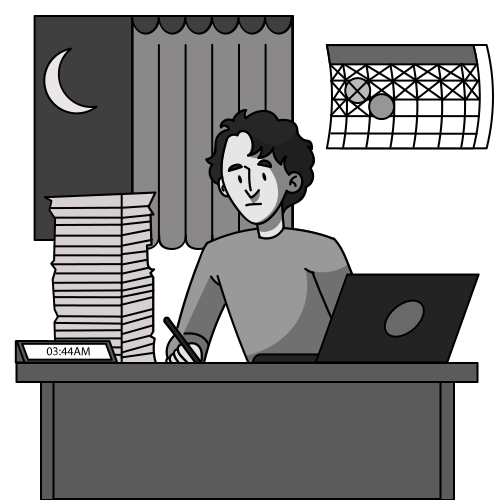
Imagine you have a week to complete a report. Even if it could be done in a couple of days, you might find it taking the whole week. This is Parkinson's Law in action, first observed by Cyril Northcote Parkinson, a British historian, and author. He noted that bureaucratic work tends to increase in complexity and volume to consume the time allotted for it. Essentially, the more time we think we have to do something, the longer it will likely take us to do it, often due to decreased efficiency or added complexity but also due to people’s nature to procrastinate knowing the deadline isn’t yet here.
Example
Project Deadlines
A team given two months to complete a project might use the entire time, while if given only one month, they might complete it just as effectively. Why? The shorter deadline forces more efficient use of time.
In your professional life
Personal Deadline Strategy
Set personal deadlines shorter than official ones to increase your productivity and allow time for refinement. For instance, if a report is due in two weeks, aim to complete it in 10 days. This self-imposed time pressure can boost your focus and efficiency, while the buffer period allows for unexpected delays or last-minute improvements. By consistently beating deadlines, you'll build a reputation for reliability and high-quality work.
Go deeper in ThinkBetter
ThinkBetter is the app for mental models and cognitive biases. For Parkinson's Law, the free version includes more than this page — further examples, a quiz, audio, and a weekly path — and every model and bias in the library. Pro is an optional, inexpensive upgrade for the rest of the deep-dive.