
Ambiguity Effect
People tend to avoid options with unknown probabilities in favor of those with known risks.
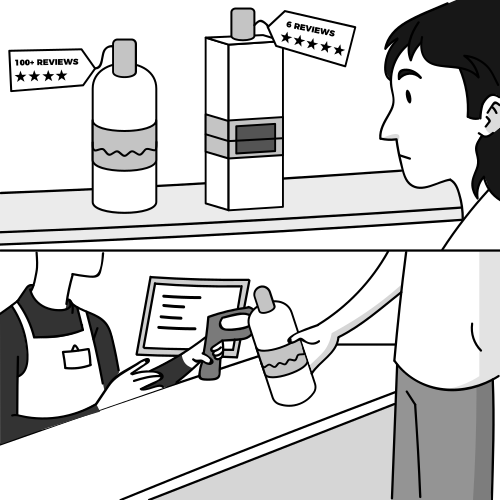
The Ambiguity Effect is a cognitive bias where individuals shy away from options with uncertain outcomes or ambiguous information, preferring choices where the probabilities of outcomes are known. In other words: we prefer clear, even if worse. This aversion to ambiguity is rooted in our desire for predictability and control over our environment. The phenomenon was identified within the context of decision theory and behavioral economics, highlighting how people's risk assessment is not just about avoiding risk, but also about avoiding uncertainty. It illustrates our natural inclination to favor the devil we know over the devil we don't, even if the unknown option could potentially offer better outcomes. This bias can lead to suboptimal decision-making, as individuals might miss out on opportunities simply because they lack complete information or because the risks are not fully understood.
Example
Investment Choices
Investors prefer putting money into a savings account with a low but guaranteed interest rate over a new investment fund with potentially higher returns but unclear risks. Why? The known risks of the savings account are more comforting than the uncertain potential of the investment fund.
In your professional life
Clarity Drives Acceptance
When presenting new ideas, provide clear, detailed information to reduce colleagues' uncertainty and increase acceptance. This approach demonstrates your ability to communicate effectively and increases the likelihood of your ideas being implemented, potentially leading to greater influence within your organization.
Go deeper in ThinkBetter
ThinkBetter is the app for mental models and cognitive biases. For Ambiguity Effect, the free version includes more than this page — further examples, a quiz, audio, and a weekly path — and every model and bias in the library. Pro is an optional, inexpensive upgrade for the rest of the deep-dive.