
Dunning-Kruger Effect
Individuals with low ability or knowledge/experience overestimate their competence, while experts may underestimate their capabilities.
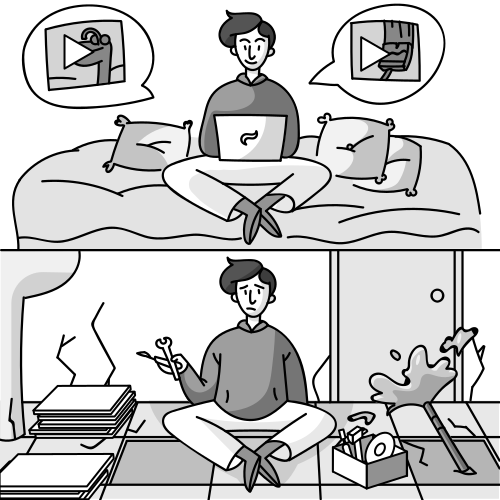
Imagine someone who's just begun learning to play the guitar. After learning a few chords, they might think they're ready to hit the big stage. On the flip side, a seasoned guitarist who's well-versed in intricate techniques might focus on the tiny aspects they don't know, feeling like there's always more to master. This phenomenon is the Dunning-Kruger Effect in action: novices (and even more experienced people alike) often don't know what they don't know, leading to inflated self-assessments and a feeling they know more than they actually do. This is everywhere: Studies on software engineers revealed that 42% rated themselves in the top 5% among their colleagues. Meanwhile, a University of Nebraska faculty survey found 68% believed they were in the top 25% for teaching skills, with 90% considering themselves above average.
Example
Starting a Business
Someone might dive into launching a startup after reading a few business books, thinking they've got it all figured out. Why? Their limited knowledge (and real world experience) gives them unwarranted confidence, overlooking the complexities, specifics of running a business.
In your professional life
Leveraging Feedback for Career Advancement
As an employee, proactively schedule regular check-ins with your supervisor and peers to gather feedback on your performance. By initiating these conversations, you're not only showing initiative but also gaining valuable insights to guide your professional development. For instance, a software developer might request code reviews from senior team members, or a sales representative could ask for critiques of their client presentations. This approach demonstrates your commitment to improvement and can help you identify and develop the skills most valued by your organization, potentially fast-tracking your path to promotion or new opportunities.
Go deeper in ThinkBetter
ThinkBetter is the app for mental models and cognitive biases. For Dunning-Kruger Effect, the free version includes more than this page — further examples, a quiz, audio, and a weekly path — and every model and bias in the library. Pro is an optional, inexpensive upgrade for the rest of the deep-dive.