
Illusion of Control
We tend to overestimate our ability to control events, even when we have little or no influence over them.
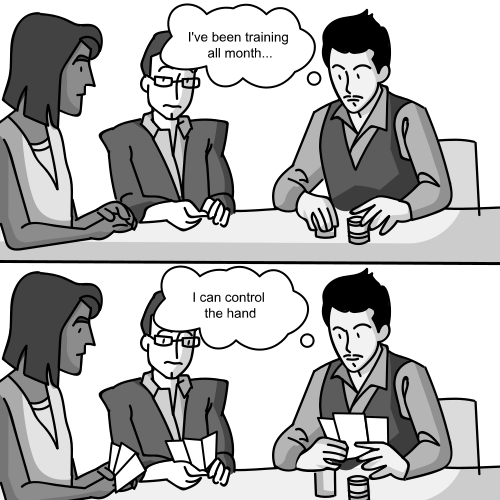
The Illusion of Control is a cognitive bias where people believe they can influence outcomes that are actually determined by chance. Essentially, it's like thinking you can affect the roll of dice by shaking them in a certain way. We tend to overestimate our ability to control or influence events, especially in situations involving luck or random chance. This bias often leads people to believe they have more control over their environment than they actually do. Think of it like feeling you can influence the outcome of a lottery by choosing your "lucky" numbers!
Example
Gambling Behavior
A poker player believes they can control the outcome of a hand through specific rituals or "skills," despite the cards being dealt randomly. Why? The illusion of control makes them feel they can influence chance-based outcomes.
In your professional life
Control Your Controllables
Focus on aspects of your work you can directly influence. As a customer service rep, you may not control company policies, but you can impact customer satisfaction through excellent communication and problem-solving. Concentrate on providing exceptional service within your power, like proactively updating customers on orders or offering alternatives for out-of-stock items. This approach improves performance, reduces stress, and can lead to higher customer satisfaction scores, potentially setting you apart for advancement.
Go deeper in ThinkBetter
ThinkBetter is the app for mental models and cognitive biases. For Illusion of Control, the free version includes more than this page — further examples, a quiz, audio, and a weekly path — and every model and bias in the library. Pro is an optional, inexpensive upgrade for the rest of the deep-dive.