
Regression to the Mean
Regression to the mean is the statistical phenomenon where extreme data points are likely to be followed by more average ones.
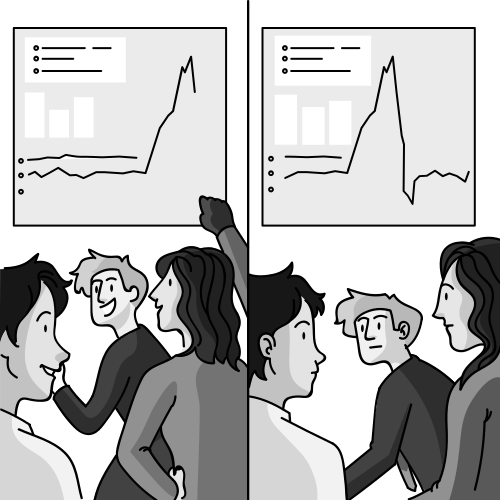
Let's think of a simple dart game. Imagine if someone, who's not a professional dart player, hits near the bullseye on their first try. It's pretty impressive! But if they throw another dart, the second shot is likely to be farther from the bullseye, closer to their usual performance. This doesn't mean their skills have deteriorated; it's just that the exceptional first shot was an outlier. Similarly, if their first shot was far off the mark, their next might be closer to the target. Regression to the mean essentially highlights that extreme events (both good and bad) tend to be followed by more typical, average events.
Example
Academic Scores
A student who usually gets average grades might get a high score on one exam. If their next grade is closer to their average, it doesn't mean they didn't study; it could simply be regression to the mean.
In your professional life
Sustaining Success
After a particularly successful project, maintain consistent effort rather than assuming continued exceptional performance. Recognize that your recent success may partly be due to favorable circumstances. Continue applying the strategies that led to your achievement, but also stay open to new challenges and learning opportunities. This approach helps you build on your success while avoiding complacency or burnout from trying to constantly exceed past performance.
Go deeper in ThinkBetter
ThinkBetter is the app for mental models and cognitive biases. For Regression to the Mean, the free version includes more than this page — further examples, a quiz, audio, and a weekly path — and every model and bias in the library. Pro is an optional, inexpensive upgrade for the rest of the deep-dive.