
The False Consensus Effect
We tend to think more people share our beliefs and behaviors than they actually do.
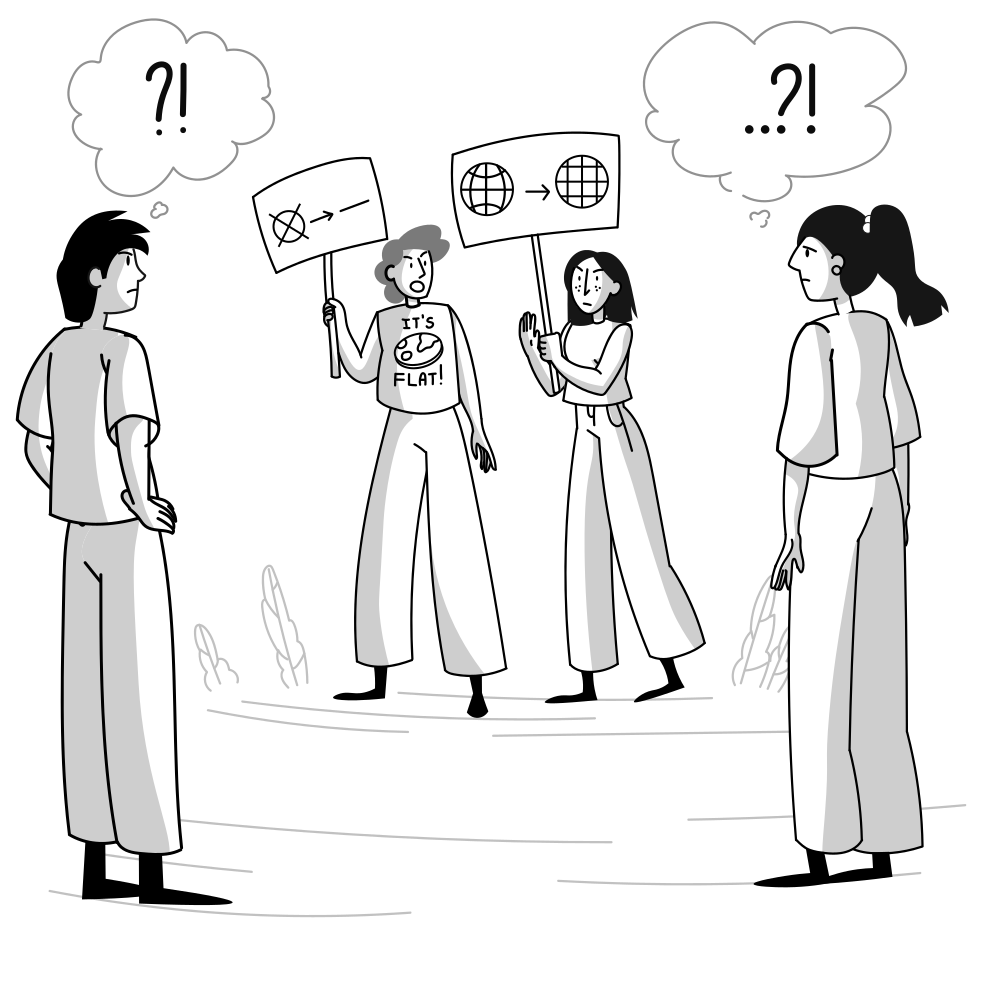
The False Consensus Effect is a cognitive bias where we tend to overestimate how much other people think and act like us. Essentially, it's like believing our own personal bubble of thoughts and behaviors is how the majority of people feel and act. We tend to overestimate how many people like what we like, how many people behave the way we do — essentially we tend to overestimate how much like us most people are. Think of it like you feeling like everyone loves pineapple on pizza just because you and your close friends do!
Example
Movie Opinion
You absolutely loved a new movie and assume everyone else did too. However, when you discuss it at a get-together, you're surprised many didn't. Why? We tend to project our own feelings and beliefs onto others, believing our views are more common than they might be.
In your professional life
Perspective Diversification
In healthcare, actively seek feedback from patients and their families about their care experience. By soliciting diverse perspectives, you're not only improving patient satisfaction but also gaining insights that may challenge your assumptions about quality care. This can lead to more patient-centered practices and a deeper understanding of the varied needs and expectations within your patient population.
Go deeper in ThinkBetter
ThinkBetter is the app for mental models and cognitive biases. For The False Consensus Effect, the free version includes more than this page — further examples, a quiz, audio, and a weekly path — and every model and bias in the library. Pro is an optional, inexpensive upgrade for the rest of the deep-dive.