
In-Group Bias
People tend to favor members of their own group over those from different groups.
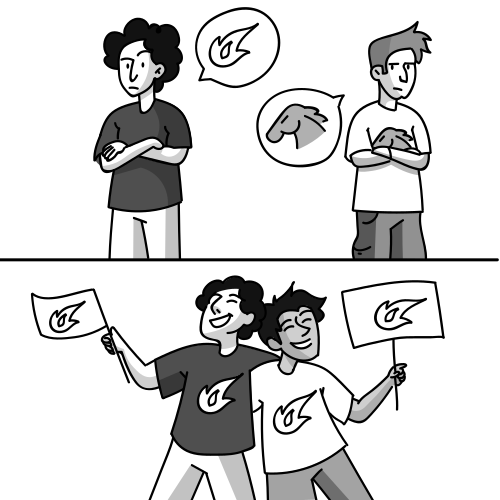
In-group bias is a psychological tendency where individuals give preferential treatment and have more positive attitudes towards people who belong to the same group as themselves. This 'group' could be defined by any shared characteristic, such as nationality, race, religion, or even favorite sports teams. The concept stems from social identity theory, which suggests that part of an individual's self-concept comes from their membership in various groups. Historically, this bias has roots in our evolutionary past where aligning closely with one's group could mean better survival chances. While it might have had survival benefits, in modern settings, it often leads to partiality and can reinforce divides within societies or organizations.
Example
Hiring Practices
An HR manager might unconsciously favor candidates who graduated from the same alma mater. Why? This bias might convince the manager that these candidates are more likely to fit in with the company’s culture, potentially overlooking equally or more qualified candidates from different backgrounds.
In your professional life
Seek Cross-Departmental Collaboration
Actively seek collaboration with colleagues from different departments or backgrounds to broaden your perspective and skill set. For example, if you’re a sales representative, working with colleagues from the marketing or product development teams can provide new insights and enhance your understanding of the company's overall operations. This approach helps you gain diverse perspectives, develop new skills, and contribute to more innovative solutions.
Go deeper in ThinkBetter
ThinkBetter is the app for mental models and cognitive biases. For In-Group Bias, the free version includes more than this page — further examples, a quiz, audio, and a weekly path — and every model and bias in the library. Pro is an optional, inexpensive upgrade for the rest of the deep-dive.