
Framing Effect
How information is presented shapes our decisions and judgments, even when the underlying facts are the same.
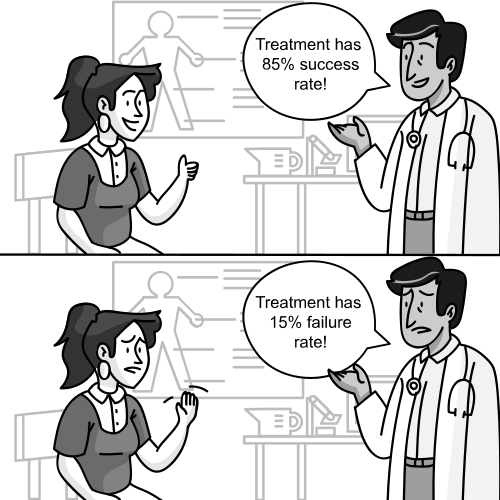
The Framing Effect is a cognitive bias where our choices are influenced by the way information is presented to us. It's like seeing the same picture in different frames - the picture hasn't changed, but how we perceive it might. We tend to react differently to identical information depending on whether it's framed positively or negatively. For instance, we might be more likely to choose a medical treatment that's described as having an "80% survival rate" rather than a "20% mortality rate", even though they mean the same thing. This bias shows that our decisions aren't just based on facts, but also on how those facts are packaged and delivered to us.
Example
Health Choices
A doctor presents a treatment option as having an "80% success rate" instead of a "20% failure rate". Why? Patients are more likely to choose the treatment when it's framed positively.
In your professional life
Frame Feedback as Growth
When giving feedback, frame critiques as opportunities for improvement rather than pointing out flaws. For instance, instead of saying "Your presentation lacked detail," say "Adding more specifics could make your presentation even stronger." This approach can make feedback more palatable and actionable, potentially leading to better reception and implementation of suggestions.
Go deeper in ThinkBetter
ThinkBetter is the app for mental models and cognitive biases. For Framing Effect, the free version includes more than this page — further examples, a quiz, audio, and a weekly path — and every model and bias in the library. Pro is an optional, inexpensive upgrade for the rest of the deep-dive.